
Sketch Like a Pro: Step by Step Guide for Drawing Sonic

Introduction to Drawing Sonic
Why Draw Sonic
Drawing Sonic is like bringing a bit of nostalgia to life. Whether you started with his fast-paced video games or his adventurous TV shows, sketching his spiky quills, bold red shoes, and fearless stance is a journey that both beginners and seasoned artists can enjoy. Sonic stands out with his edgy style and laid-back attitude, giving fans a fun, colorful challenge to tackle on paper. You can get downloadable sonic coloring pages pdf sheets from our homepage.
When you put pencil to paper, you unlock skills that can be used for more than just creating cool fan art. You’ll learn to capture Sonic’s fluid poses and vibrant expressions, skills that can level up your overall drawing game.
Benefits of Learning to Draw Sonic
Jumping into the steps of drawing Sonic isn’t just for fun; it can really kickstart your art skills in ways you might not expect. Here’s what’s in it for you:
- Artistic Progress: Sketching Sonic hones your sense of proportion and symmetry while pushing you to detail those famous quills and sneakers. Gradually, you’ll find yourself getting better at capturing characters and scenes with precision.
- Boosted Imagination: Sonic encourages you to explore a variety of poses, moods, and artistic approaches. Experimenting in this way frees up creativity and helps you craft your personal style.
- Achievement: Completing a Sonic drawing can give you that “I did it!” feeling. It’s a little victory that can spark the motivation to tackle bigger, tougher projects.
If you’re itching for more inspiration, check out our sonic drawing ideas. You might find a new twist on Sonic that’ll get your creativity racing.
Getting Started
Easy Draw Sonic Bold Materials Needed
Before you dive into sketching our blue hedgehog friend Sonic, let’s round up the gear you’ll need. Having the right stuff at your fingertips makes drawing not just easier, but a whole lot more fun.

| Material | Use |
|---|---|
| Pencils (HB, 2B, 4B) | For sketching and tweaking details |
| Eraser | To fix those tiny oopsies |
| Sharpener | To keep your pencils at their pointiest |
| Drawing Paper | Your canvas for Sonic’s antics |
| Ruler | For those straight lines and measurements |
These basics will set you up for a good start in your Sonic sketching adventure. Once you’re comfy with these, who knows? You might want to experiment with more tools to spice things up!
Basic Sketching Techniques
Nail down some fundamental sketching skills, and you’re on your way to creating an awesome Sonic masterpiece. These tricks will kickstart your sketch and save you some hassle down the road.
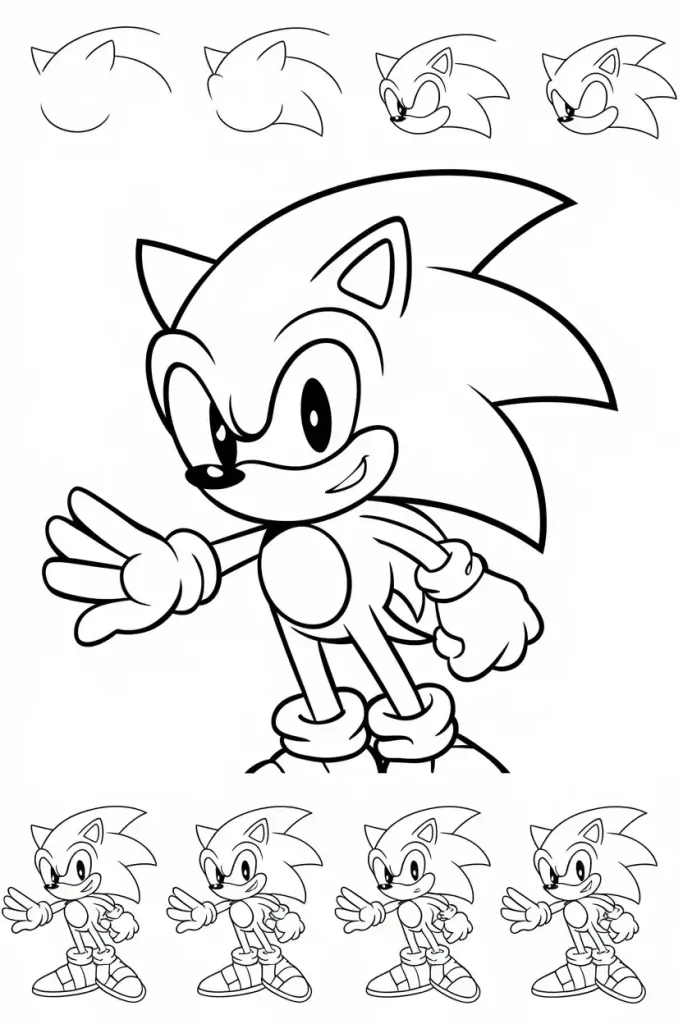
1. Light and Loose Lines: Begin with light, breezy strokes to sketch Sonic’s basic shape and pose. This helps you get the hang of proportions and positioning without any pressure of finality.
2. Simple Shapes: Break Sonic down into easy-peasy shapes like circles, ovals, and short lines. Think circles for his spiky head and body, ovals for his speedy limbs. This sets the stage for getting him to look just right.
3. Cross-Hatching: Give some life to your sketch with shading and texture. Cross-hatching means drawing crisscross lines to add some depth and character.
4. Outlining: Happy with how Sonic’s looking? Cool! Firm up those first lines to clean things up. This gives you the framework to go wild with the details later.
With these basics under your belt, you’ll breeze through the step-by-step guide on drawing Sonic. Practice often and watch your skills, and your confidence, shoot through the roof.
Step by Step Guide

Step 1: Sketching Sonic’s Head
Alright, you’re going to start with a big ol’ circle for Sonic’s noggin. Think of it like the foundation for his face and ears. Split that circle into quarters—up and down, side to side—so you’ll know where to slap on his features.
Step 2: Drawing Sonic’s Body
Below Sonic’s head, sketch out an egg-like shape. That’s his torso. Connect the head to the body with two curvy lines. Voilà! You’ve got yourself a neck.
Step 3: Adding Facial Features
For those peepers, draw two large ovals that overlap a bit, sitting up high in that head circle. Inside each oval, pop in a smaller circle for the pupils. Below ’em, sketch an oval for his nose and a curve that’ll give him a cheeky grin.
Step 4: Detailing Sonic’s Quills
Those famous quills? Draw three big, swooping spikes sticking out the back of Sonic’s head, spaced evenly and pointing down. For his ears, plop two triangles on top of his head circle like he’s wearing a pointy hat.
Step 5: Drawing Sonic’s Arms and Legs
For Sonic’s arms, sketch two long, skinny ovals shooting out from his torso. Stick smaller ovals at the ends for hands. As for his legs, send two slightly bent lines down from the torso, with little ovals at the bottom for feet. Make sure he doesn’t topple over—gotta keep those legs looking active!
Step 6: Adding Finishing Touches
This is where you make it pop! Detail Sonic with gloves on his hands and snazzy shoes on his feet. Erase those sketch lines you don’t need anymore and go wild with shading and textures to bring your Sonic drawing to life.
Enhancing Your Drawing
Shading and Texturing
So, you’re looking to bring your Sonic sketch to life, huh? Let’s dive into some techniques that can transform your doodle into a real showstopper. Shading and texturing will be your best buddies. With these methods, Sonic will leap off the page more dynamic than ever.
Steps for Effective Shading:
- Find That Light Source: Check out where the light’s coming from. That’s gonna tell you where to plop those shadows and highlights on your blue hedgehog.
- Base Shading: Grab a light pencil and shade the spots that the light doesn’t touch. Keep it smooth and gentle like you’re petting a fluffy cloud.
- Layering: Want some depth? Stack those shades! Use darker pencils to get those rich shadows.
- Blending: Make it smooth with a blending stump or even just your finger—start mixing to get a natural look between light spots and dark ones.
- Highlights: Got a highlight? Erase tiny bits to show where light’s hitting Sonic just right.
Textures are key to Sonic’s charm. His fur, shoes, gloves—each has its own vibe. Go wild with different pencil strokes to give those elements a real feel.
Incorporating Depth and Dimension
Depth is the secret sauce that turns flat sketches into living, breathing images. Adding a bit of dimension makes your Sonic pop, giving him that extra punch.
Techniques for Adding Depth:
- Perspective Magic: Use one-point or two-point perspective to create space and distance. It’s great for making Sonic leap right at you!
- Overlap Those Parts: Make Sonic’s arms and legs overlap to suggest layers and a sense of space.
- Foreshortening: Play with the size of Sonic’s limbs based on what’s closer to you. Close equals big and detailed.
- Contrast Play: Bring in strong contrast—bold darks and lights to boost depth. Dark goes back, light jumps forward.
These practices are like the secret ingredients to a rockstar Sonic drawing. But hey, if you wanna dig deeper, our sonic art tutorial and sonic drawing techniques have got loads more.
Stick with these techniques, and watch as Sonic morphs from a flat sketch into a lively, moving character. Keep honing that craft with some sonic drawing practice and fresh sonic drawing ideas. Your skills will only go up from here!
Practice Makes Perfect
Getting good at drawing Sonic is all about sticking with it and giving it your all. To ace Sonic, you gotta keep at it and try out different techniques until you nail it.
Doodle, Doodle, Doodle
Want to get better at drawing? Just keep doodling. Draw Sonic over and over, and pretty soon, you’ll get the hang of his shapes and style. You’ll just start drawing Sonic with no sweat, and your hand will just know what to do.
Why not keep tabs on how you’re doing with a little schedule?
| Week | How Often | What to Focus On |
|---|---|---|
| 1 | Every Day | Sonic’s Head and Face |
| 2 | Every Other Day | Body Shapes |
| 3 | Two Times a Week | Those Cool Quills and Details |
| 4 | Two Times a Week | Arms and Legs |
Having a plan can help you nail each part of Sonic. If you want more ways to practice, pop over to our sonic drawing practice page.
Mix Up Those Poses and Faces
Ready to level up your Sonic drawings? Try mixing up how you draw Sonic’s poses and expressions. It makes your art pop and helps you get how Sonic moves.
Start with the easy stuff, like standing or running. Then, get adventurous with jumps or spins. And don’t forget to mess around with his facial expressions—give Sonic a range, from happy to ticked off. This makes your Sonic art so much more lively. Once you’ve mastered drawing classic Sonic, why not try something a bit more eerie? Check out our Sonic.EXE Coloring Pages for a spooky twist on the iconic character!
| Pose Kind | How Often | Pose Examples |
|---|---|---|
| Simple | Each Week | Standing, Running |
| Tricky | Every Other Week | Jumping, Spinning, Attacking |
| Faces | Each Week | Happy, Angry, Surprised |
For more ideas, check out our sonic drawing ideas article.
Try these tips, and you’ll see a big difference in how you draw Sonic. Keep pushing what you think you can do and try new things to become a Sonic drawing wizard. Once you’ve mastered drawing Sonic, you might enjoy adding colors to your artwork! Check out our collection of Super Sonic coloring pages for inspiration.
Here is the video tutorial guide for drawing Sonic: